Showing posts with label Botanizing. Show all posts

Saturday, June 4, 2011

Spring Growth and More Chores Than Before

 When I returned home from my trip, it seemed that my garden had grown just as much as I had! The weather turned from unseaonable chill to summer-like heat in a short time, thrusting things upward and onward.

I replaced the winter bird feeder right away with one of the beacons of summer, a bright red hummingbird feeder. The titmice, chickadees and cardinals that were regulars during winter had not come to feed in a month. They were done with fattening up and likely to have found mates, made nests, raised young, and found new seasonal food sources. Meanwhile, hummingbirds would be looking for some post-migration refreshment.
 
Cleaning up after the winter birds included pulling some weeds that sprouted from the seeds in the feeder. I let the sunflowers grow as tall as they might, but pulled up the rest that grew thick under the feeder. Aside from those weeds, there were a few clover and  crab grass volunteers. Rampant garlic, mint, and and spurge shoots also needed some tending to.
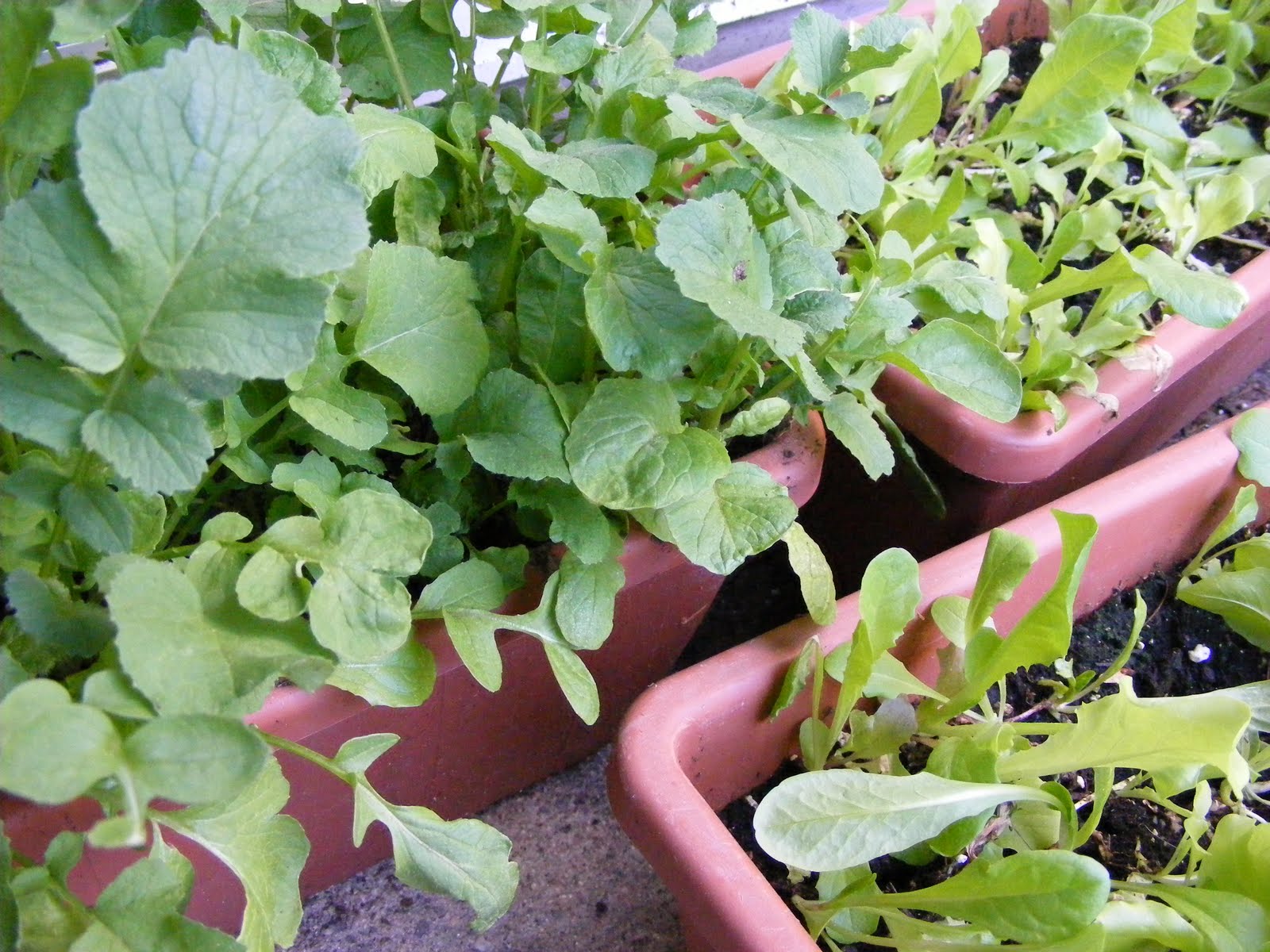
 I thinned out my crops of early greens as well, just in time for a lush salad or two. After being on the road, it's always nice to home home to fresh eats like this. I'll get a week or two more out of these, using them as micro-greens, and then it will be time to uproot the majority of them so that the radish roots and the romaine florets can mature.

My warm season seedlings responded favourably to the change in temperature. Because I don't have the space to start them inside, I started them outside as soon as the threat of frost was over. They were sporting seed leaves, but not for long. With luck, I'll have pickling cucumbers, rainbow tomatoes, edamame and black bush beans to transplant beside my already thriving veggie plants from the local farm. Among the seeds I planted, I found some maple seeds that the wind planted in my seedling tray too!

About a week before I left, I also planted some lawn seeds, as I do every year. My mini-lawn already needed mowing when I got back. This is the size of lawn I can handle! I snipped it back with some hand shears in just two minutes. I leave the clippings on the lawn, just as I would with a mulch mower, so that as they disintegrate they leave their nutrients in the soil. I find this miniature green pasture just as beautiful as my other container plants, although it requires a little more maintenance than they do.

Of course, all of my plants were in need of some water. Some needed it more than others. My sage was suffering some drought, evident by the powdery mildew attacking its leaves.The most efficient way of controlling this fungus is to remove all the effected leaves from the plant. It's a good thing the young plant had enough leaves to spare after the attack. I moved it out of its vulnerable placement in a shallow pot and full sun.
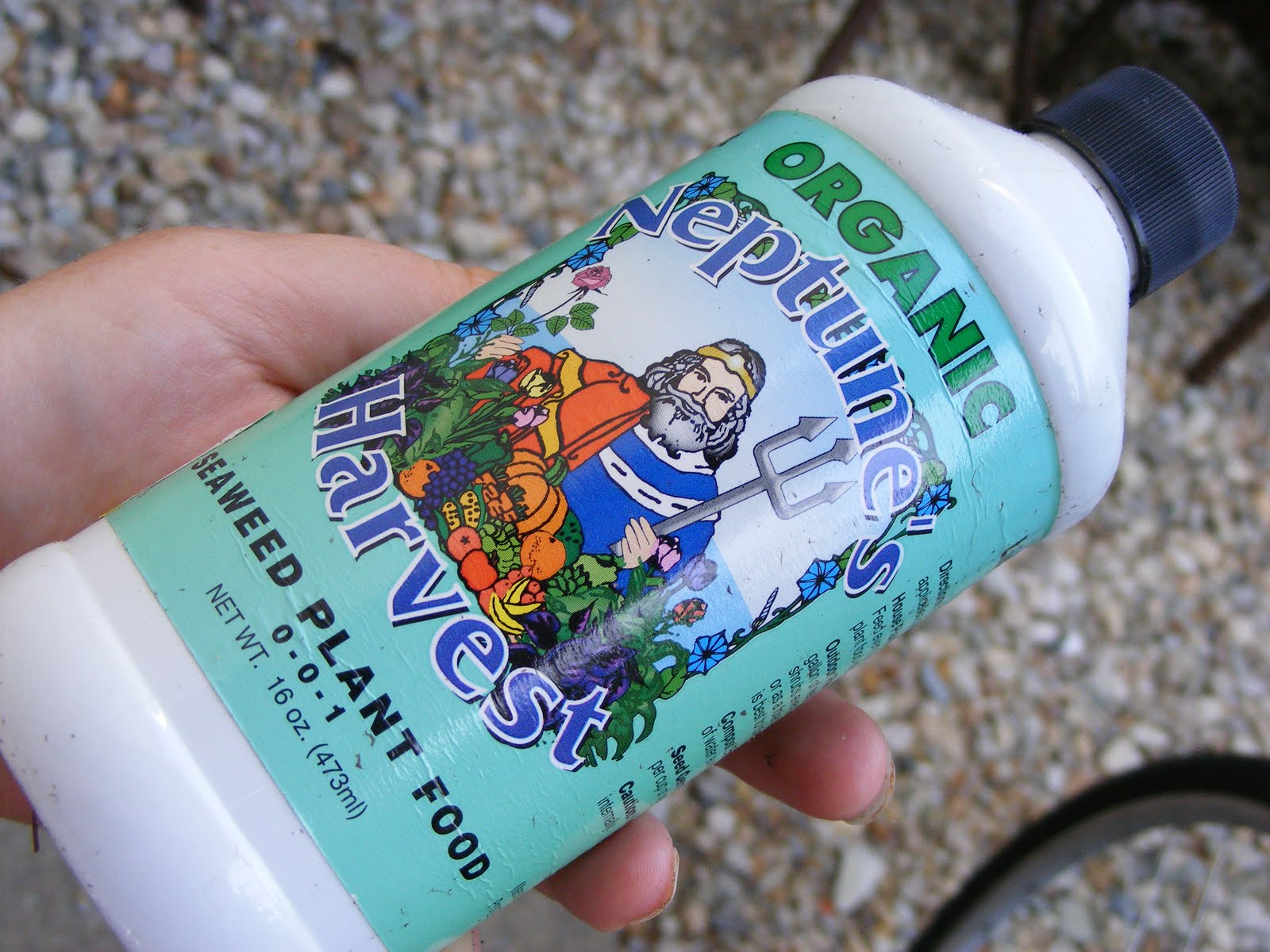
As I watered all my plants I gave them a meal of liquid fertilizer as well. I use organic seaweed fertilizer, which feeds the soil first. This way the nutrients will be available to the roots all season. It's the kind of fertilizer that plants take up at their own pace, so I can enrich the soil regularly without any worry about burning plants like with chemical fertilizers. Rich soil is especially important to plants this time of year as they spread their roots, lengthen their stems, grow their leaves and transform their flowers.


The most conspicuous plant growth that takes place in my garden is by far the reaching of the clematis tendrils. Every day I find it claiming another victim. I politely remove the tendril from the shrub or tall grass it has grabbed onto and redirect it along the top of the fence. Nonetheless, it seems to have a mind of its own. I found it grasping and scaling numerous other plants and objects in my yard when I returned, and found it necessary to train the vine with bits of wool, tying it fast to the fence. (After training it I gave it a nice meal.)


When I ventured over to my vegetable plots, I had expected to see more growth from my rhubarb. Looks like the slugs paid a few visits, inhibiting the health of the leaves. They did the same thing to a few of my pepper plants and my only dahlia. I just may have to inhibit the health of those slugs with some bait or sharp eggshells or worse.
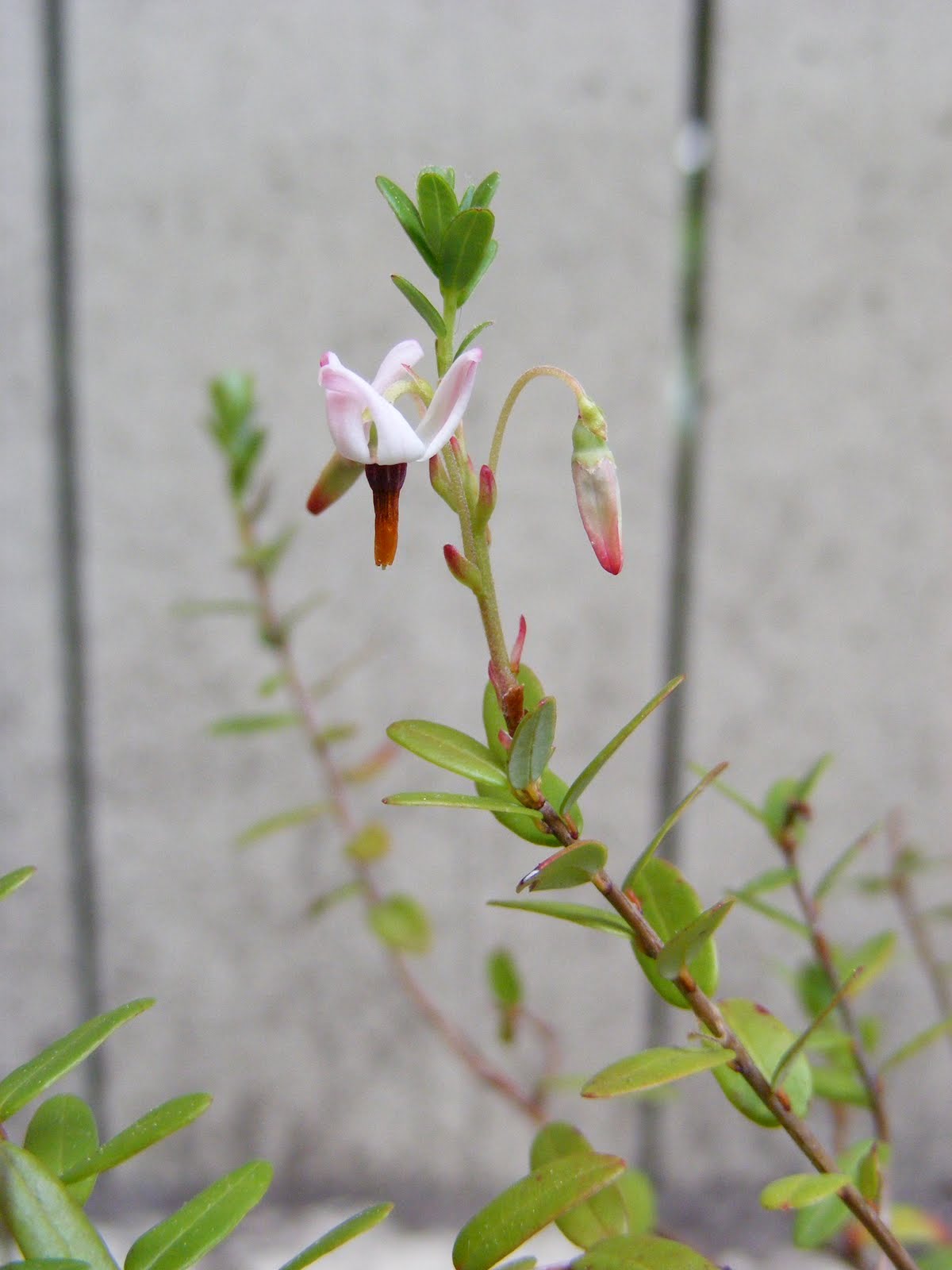


My new cranberry plant seemed to be healthy and unscathed by my absence. In fact, I counted one, two, three future cranberries. I plopped it, nursery pot and all, into a small tub of water before I left and that seemed to pay off. For the longer term, I plan to find a special pot for it with no holes in the bottom. As long as this New England native has access to boggy soil and a good amount of sun, it will continue to be happy.


Finding new pots was one of the more favourable garden chores of the week, but my most favourite chore didn't crop up until I came across a few bare spots in the garden soil. I would just have to scour the nursery for a few new plants! Now that my garden was filling out, I could clearly see the places that needed a little more greenery. One of these was the pot that I grew my raspberries in last year, at left. (I chose to transplant the raspberry into one of my vegetable plots earlier in the season.)


When all those chores were done, there was just one more thing left to do: light a torch and enjoy the evening!

Sunday, May 22, 2011

Violets: A Most Sercretive Wildflower

A "lion" among wildflowers.
 "The broken glass
And the rusty nails
Where the wild violets grow
Say goodbye to the railroad
And the mad dogs of summer
And everything that I know. . ."
--Tom Waits, singer/songwriter

The wild violets (Viola sororia)have been in bloom for weeks here now, filling cracks in pavement, patches in lawns, thicket bottoms and drab ditches with the color purple (and less commonly, a mixture of purple and white). I look forward to seeing these flowers dappling the landscape in mid to late spring, but this year, it's not the colorful blossoms I have been waiting for. As the plants became more conspicuous I began to seek out the ones that had been in bloom the longest (including the one that seems to be slowly sneaking under my garden fence). I lifted up the petals and leaves to peek at the root zone of these plants, often to find only bare soil. Finally, the other morning I found what I had been waiting for!
 
The lower petals are longer, and serve as a landing pad for pollinators. Insects are guided by the petal stripes to where the nectar is, deep inside the spur at the back of the flower.

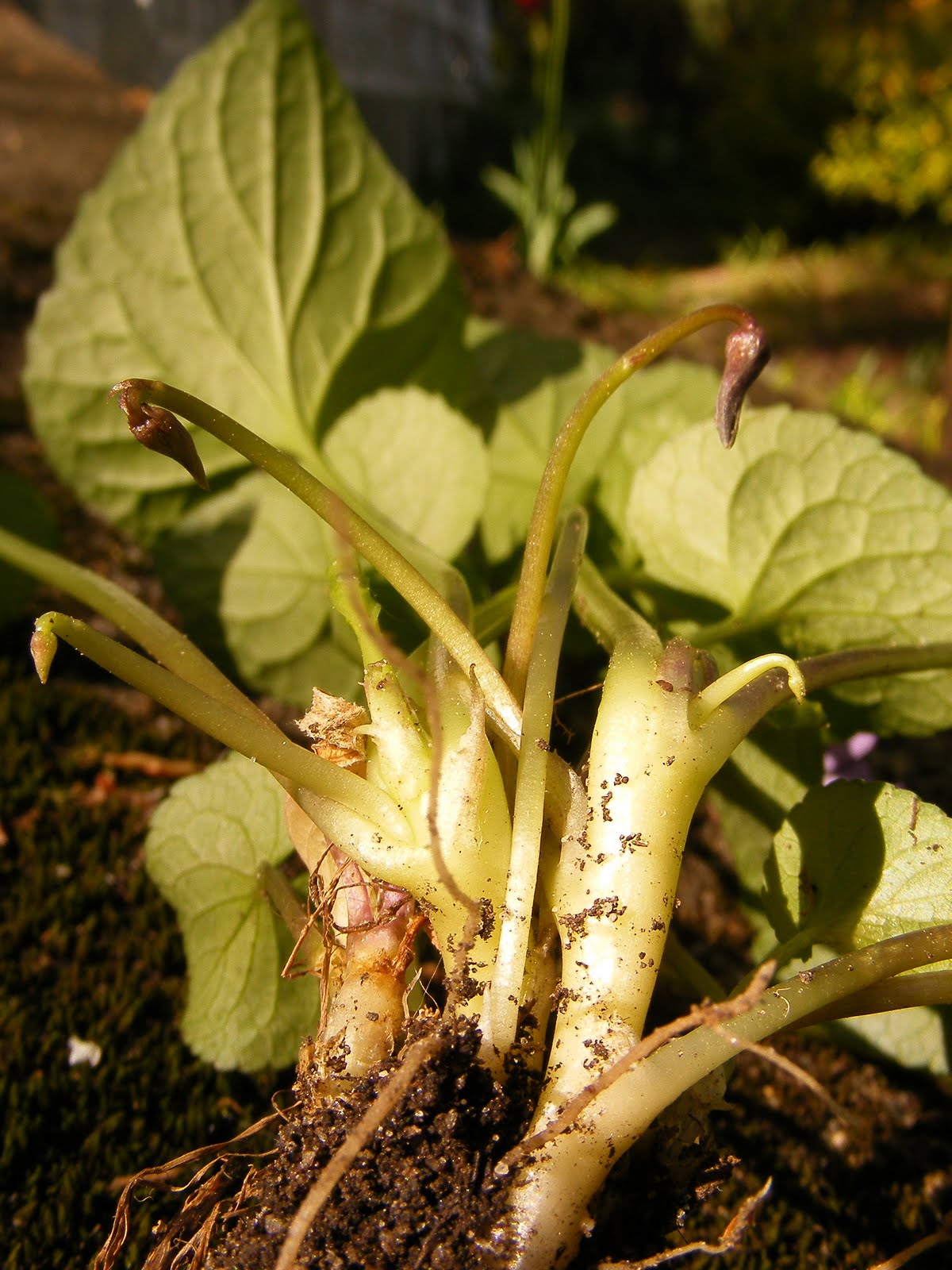
Underneath the conspicuous blue-violet flowers and the glossy, heart-shaped leaves, this plant has a vital secret. Sometime after it grows the flowers designed to attract pollinators, the violet grows a second set of flowers that remain hidden and closed. Because these flower shoots barely break the soil surface, they can be hard to find, but these are the key to the plant's propagation. Although violets can spread using short rhizomous roots, they also rely on seeds, and cleistogamous (hidden) flowers produce many more seeds than the insect pollinated ones.

The cleistogamous flowers barely breach the soil surface, and never actually open.
Both types of seeds, the ones produced by two cross-pollinated flowers and the ones produced by just one cleistogamous flower, eventually begin to dry and shrink. The pressure causes the seed pod to burst so that the seeds are projected at some distance from the parent plant. Some of them serve as meals to ground-feeding birds and chipmunks, but many others grow into new plants that add dashes of purple in all sorts of places. The short-stemmed flowers are popular in small wildflower bouquets that children are prone to picking, and the leaves and flowers are edible.

Sunday, May 15, 2011

Garden Bloggers Blooms Day 05/11

It's my second blooms day, and I have oodles of local, blooming flowers to share! Off the top I've included some wild species. There are also apple and cherry blossoms, violets, strawberry flowers in bloom and other spring spoils that I haven't included here.
The highbush blueberry grows along many of my favorite hiking trails.
I found this little wildflower on the edge of a bank in an oak forest. Anyone familiar with the name? I'll have to search my books for it a little more. . .
Garlic mustard (Alliaria petiolata)colonizes most any untended urban soils. Mowing down the plant before its flowers transform into seeds is wise. The leaves are edible, and make a pungent addition to any vegetable dishes.
Japanese honeysuckle vine (Lonicera) was introduced as an ornamental plant, and now thrives in many disturbed open and woodland sites all along the east coast.
Commonly found in lawns and meadows, ground ivy (Glechoma hederacea) was once considered to be a useful medicinal plant, as well as a fermenting agent in beermaking (instead of hops).

Greater Celandine (Chelidonium majus) can be easily  identified by the bright orange sap inside its stems.


Lily-of-the-Valley bush (Pieris japonica) is a flowering shrub that can fit in any sized garden (even container gardens) and requires very little maintenance.
Lilac flowers of white, deep purple and mauve are peeking over fences across New England right now.
Viburnum rhytidophyllum is a broadleaf evergreen that pairs nicely with rhododendrons.
Viburnum 'Chesapeake' is similar to hydrangea, but beats them to the punch when it comes to bloom time.
The strong, sweet fragrance of this Viburnum burkwoodii makes it a great entryway pick.
Fothergilla major glows in the long rays of sun.

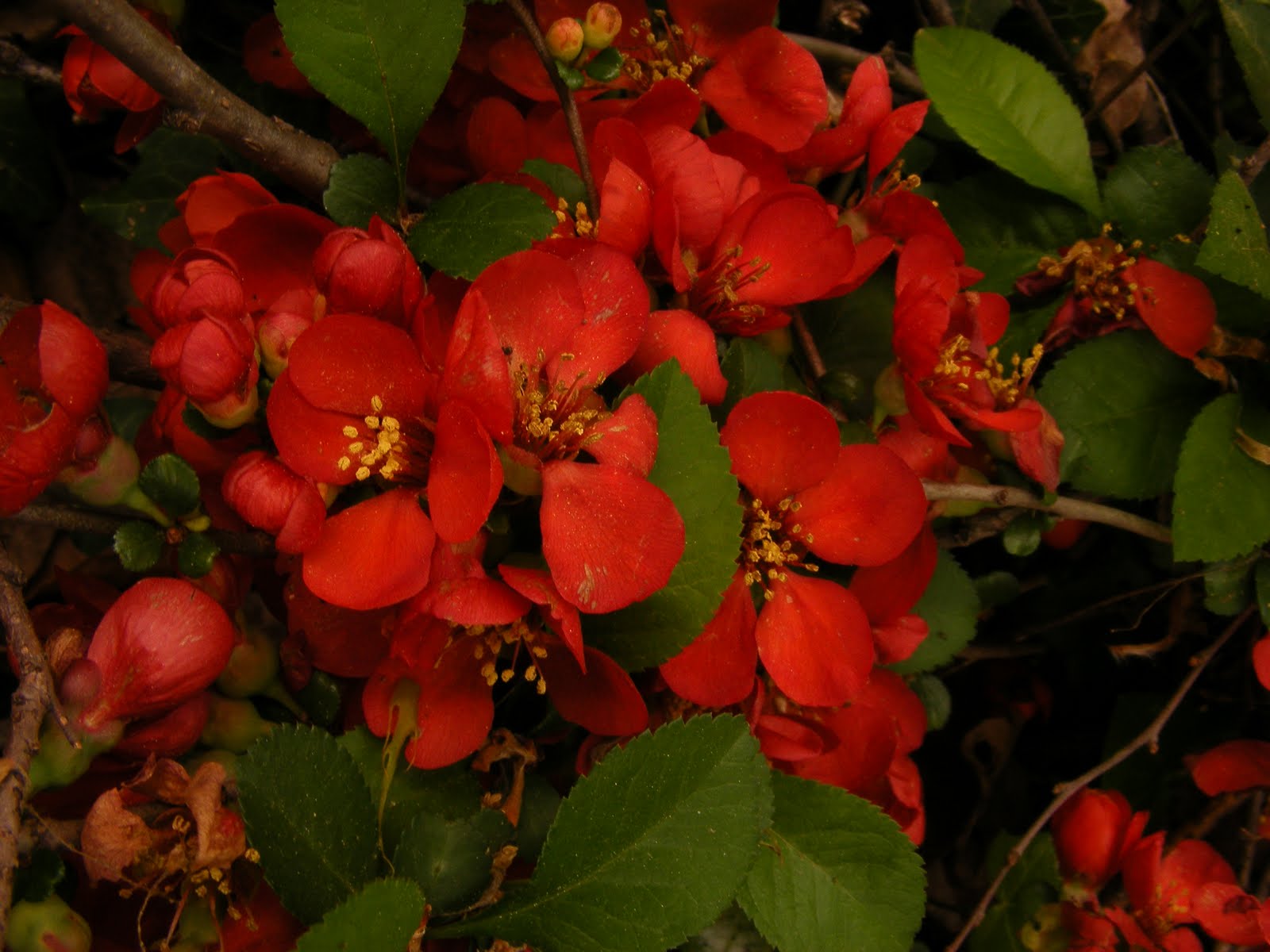
Flowering quince (Chaenomeles japonica)
Enkianthus is similar to Pieris in many ways, but much less common.
Early-blooming azaleas offer strking color even from some distance away.
With their delicate appearance, Bleeding Hearts (Dicentra sp.) are deceptively hardy. It's not long after the first shoots appear that they display an elegant scaffold of stems and pendant flowers.

Spurge (Euphorbia sp.) is a striking foliage plant with weedy tendencies.
Lamium is used by many to control erosion, but has wandering tendencies. At Mt. Auburn cemetery, I found this small, well maintained patch surrounded by lawn.
The papery buds of chive flowers are just beginning to break. I'll be harvesting some to eat very soon.
Perriwinkle (Vinca minor) is a vigorous groundcover that bears many blooms when in sun, but can grow in any light condition.
I love to see flowering Phlox spilling over front retainer walls this time of year. Paired with veronica, euphorbia, or any other rock and alpine plants it can be quite eye-catching.
One of the many perks of traveling by bicycle is catching the fragrance of Lily-of-the-Valley as I ride by this stretch of stone wall!
The snapdragons in the Natick Farm's hoophouses are prolific.
The flowers of Solomon's Seal are easy to miss underneath their arching stalks in the shade.
Tall dogwood trees dot the hilly landscape at Mt. Auburn Cemetery.
Davidii involucrata is sometimes called the handkerchief tree after its large white bracts that turn from white to brown.
Korean Mountain Ash
Styrax japonica's pendent bells reveal bright yellow stamens if viewed from below.
Magnolia 'Sunsation' petals peel back to allow the fruit inside to mature.
A panicle of yellow, pink and white chestnut flowers.
My tomatoes are in bloom too! I'll be posting soon about what I'm doing to protect these beautiful blossoms from the cold.

Monday, May 9, 2011

Marooned at the Garden Center!

My modest haul of purchases.
 Here's what happens when I'm marooned at the garden center in a thunder/ lightening/ hail storm: I buy a lot of stuff! It was coming down so loudly on the roof of the glass house that it seems I could no longer hear the voice of reason. While the weather prohibited us from making the trek back to the vehicle (lightening came in frequent bursts and the ground was white with hail stones), I picked up some things that I probably wouldn't have otherwise bought. Now that I've got them all safely home, here are my afterthoughts on buying those items. . .

Crocosmia corms. Really? How did these get in there? I distinctly remember doing battle with these ever-multiplying marble-like roots in Victoria. In the stretch of one season, it seemed they could spread thickly from one end of a mixed border to the other. I spent long afternoons, gardening fork in hand, trying to at least thin them out between the shrubs. Must be nostalgia that got them into my cart today. Needless to say, I'll be either planting them in a container or in the cut-flower portion of my community plots and digging them up for the winter. They won't be as hardy in this climate either.
Crocosmia "Lucifer"

Gladiolus corms. I've never been the type of gardener to cultivate these highly intensive flowers. They require sharply drained soil, fertilizer throughout the season, staking, digging up, fungicide and more. If I compare that with maintenance required for the spring bulbs and foliage plants I'm accustomed to growing (a simple repetition of the mantra "que sera, sera" will usually suffice) I am stumped as to how these will fit in. It seems like the more I contemplate portioning off a small portion of my community plots for some cutting flowers, the wilder my imagination gets. Que sera, sera. . .

Ixia corms. Speaking of imagination, I couldn't imagine how to cultivate these when I first got them home. They reminded me of a flower I saw once a long time ago, but I couldn't place the name. When I looked them up, my A-Z Encyclopedia of Garden Plants told me they were "found in grassy and sandy, sometimes marshy slopes from low to high altitudes in South Africa."  It's not an exact match for my site, but I'll give it a try in my ever-expanding cut-flower garden, if only to see which of the rainbow of colors on the package label actually come true (a query that also stands for those gladiolas).

Alocasia sp. (Elephant's Ear) tuber. I'm a sucker for foliage plants, and this is one of the most exotic-looking ones out there. It seems to lend instant atmosphere to the garden. I've grown it before, but gave it away instead of overwintering the tuber indoors. This time I'm playing for keeps.

One of the many new leaves that came down in the storm.
Armoracia (horseradish) root. I might actually be able to stand by this purchase. Given its culinary utility and its reputation for growing and naturalizing in a variety of soils, I'm glad I found it. It will come in handy grated fresh in Asian meals, on pot roast, or in pickling at the end of the season.

Allium cepa (Yellow Onion). I welcome any Allium species in my garden, especially on that I use in the kitchen as much as this. Though the scent of the foliage is too strong for my patio garden, it can serve as a pest deterrent in my vegetable plot. So long as there is adequate drainage in the soil, its an easy crop to grow.

I couldn't take my usual dog-path through the garden center today, so I ended up with an unusual selection of purchases, but I'm pretty sure my friend has me beat. Only after the threat of lightening was completely gone did we attempt to load her sizable metal cow sculpture into the car! 

Friday, May 6, 2011

A Would-Be Oak Grove


This morning I pulled close to fifteen gallons of sprouted acorns from a friend's yard. Yes, she's sure she doesn't want an oak grove instead of a garden bed (when I saw how thickly the sprouts were filling the space, I asked her to be certain)! The sprouts become woody in stem and root quickly, so I always try to get them as soon as I spot them, while they still make a satisfying "POP" sensation coming out of the ground. The best part about pulling up acorns at this stage is that it's one weed I know for sure will not regrow from any root segments or scattered seeds left behind in the soil.

So I was compelled to absentmindedly yank on a few sprouts in the bed, but before I knew it, I had more than a handful of the weeds. When I looked up, I saw one, two, five. . . nine more sprouts within arm's reach! By the time my friend came out of the house, I had already pulled a large stash of acorn sprouts. My friend was suitably impressed, but why have so many baby oak trees come up in her garden?

Last fall was a mast year for the oaks in this region. This means that the population of oaks in our climate produce near one hundred times more acorns (maple and pine produce an excess of seeds during a mast year) than they usually do. They store surplus energy for years until they are ready to spend it on masting. It's a cunning tactic, one that out-smarts even the squirrels. Increased acorn production allows a large portion of the nuts to go uneaten, and to sprout in the spring. And increased sprouts means more go unseen by gardeners before becoming strong and woody. Another result of the mast, though of little comfort to gardeners, is that the squirrel population is not foiled for long- as it may also grow in response.