Showing posts with label Plant Pests. Show all posts

Thursday, June 9, 2011

This Year's Inchworm Damage

 Just as the temperature began to warm about 10 degrees above freezing and the buds began to break this spring, I spotted this nest of caterpillars.

On a branch above the nest, there was a large insect poised unmoving, intently waiting. . . The beetle's diligence must have paid off with a delicious caterpillar meal, but there were many others that escaped him and his ilk.


That much has been evident for weeks, as I bumped into thread after thread of the ones that got away. These threads are actually a second line of defense against predators for the caterpillars. If the caterpillar is threatened by a bird or another insect, it will let go of the branch with all of its legs except for the rear prolegs and make like a small green twig. If that jig fails, then it lets go with those prolegs and relies on a thread that it fastened to the branch with the spinneret in its head when it originally let go.

This year these caterpillars have left incredible damage in their wake. I took some pictures of a Norway maple on which the leaves have turned to rags, from top to bottom. Other foliage of choice for these worms that move inch by inch have been ash, elm, cherry, dogwood, crabapple, and even oak.

According to University of Massachusetts, the tree must put on a second flush of growth in order to recover. To aid regrowth, it is recommended that sufficient water be supplied, but no application of fertilizer. Drought and other leaf eaters may worsen the outlook of the tree, and if defoliation is incurred just three years in a row, all of the affected branches die.

The inchworms that cause this damage were first thought to be fall cankerworm, which have a similar life cycle to the real culprit, winter moth. Winter moth was introduced in Nova Scotia from Europe in the 1950's. In Europe,there are plenty of natural predators to regulate the winter moth population. As the moth spread to Massachusetts, it became an unregulated pest, killing numerous whole trees. Researchers at the University of Massachusetts have used pheremone traps to determine the range of winter moth over the 11 years it has been present in this state. After it was introduced in Nova Scotia, it was introduced separately in Vancouver, Canada where it also became a pest.

If you see damage to a plant by the winter moth inchworm, either trees or shrubs or perennials underneath a tree where they may have hatched, water the plant to help replenish the growth before any further damage is done by other leaf-eaters. If there are inchworms present, they can be killed on contact with Spinosad.
I haven't seen any of the inchworms for about a week now. By this time of year, late May to early June, they have dropped to the soil to pupate. Research on the west coast has determined that some native parasitic wasps and flies will prey on the pupae.

After pupation they join with a few other species of  familiar brown moths that flock to our porch lights. Last fall was a particularly abundant year for them. As adult moths, they climb up tree trunks to lay eggs which will in turn hatch into caterpillars. The moths can be thwarted from climbing up tree trunks somewhat effectively with sticky bands.

During the last phase before they hatch, dormant oil can be applied to the bark of trees to kill the eggs. With any luck, trees and will break bud and leaf out to provide us with shade and fruit undivided by holes!

Saturday, June 4, 2011

Spring Growth and More Chores Than Before

 When I returned home from my trip, it seemed that my garden had grown just as much as I had! The weather turned from unseaonable chill to summer-like heat in a short time, thrusting things upward and onward.

I replaced the winter bird feeder right away with one of the beacons of summer, a bright red hummingbird feeder. The titmice, chickadees and cardinals that were regulars during winter had not come to feed in a month. They were done with fattening up and likely to have found mates, made nests, raised young, and found new seasonal food sources. Meanwhile, hummingbirds would be looking for some post-migration refreshment.
 
Cleaning up after the winter birds included pulling some weeds that sprouted from the seeds in the feeder. I let the sunflowers grow as tall as they might, but pulled up the rest that grew thick under the feeder. Aside from those weeds, there were a few clover and  crab grass volunteers. Rampant garlic, mint, and and spurge shoots also needed some tending to.
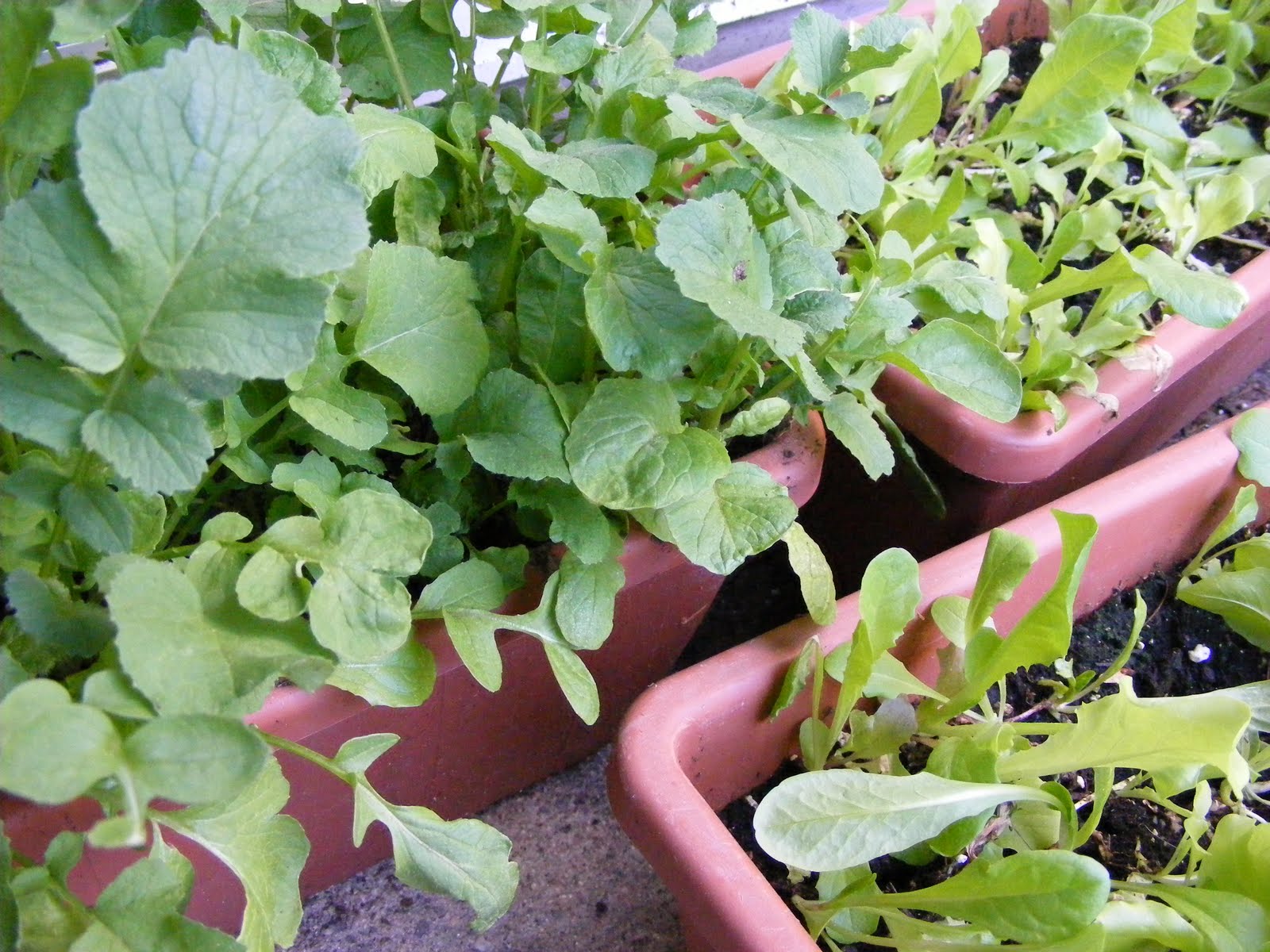
 I thinned out my crops of early greens as well, just in time for a lush salad or two. After being on the road, it's always nice to home home to fresh eats like this. I'll get a week or two more out of these, using them as micro-greens, and then it will be time to uproot the majority of them so that the radish roots and the romaine florets can mature.

My warm season seedlings responded favourably to the change in temperature. Because I don't have the space to start them inside, I started them outside as soon as the threat of frost was over. They were sporting seed leaves, but not for long. With luck, I'll have pickling cucumbers, rainbow tomatoes, edamame and black bush beans to transplant beside my already thriving veggie plants from the local farm. Among the seeds I planted, I found some maple seeds that the wind planted in my seedling tray too!

About a week before I left, I also planted some lawn seeds, as I do every year. My mini-lawn already needed mowing when I got back. This is the size of lawn I can handle! I snipped it back with some hand shears in just two minutes. I leave the clippings on the lawn, just as I would with a mulch mower, so that as they disintegrate they leave their nutrients in the soil. I find this miniature green pasture just as beautiful as my other container plants, although it requires a little more maintenance than they do.

Of course, all of my plants were in need of some water. Some needed it more than others. My sage was suffering some drought, evident by the powdery mildew attacking its leaves.The most efficient way of controlling this fungus is to remove all the effected leaves from the plant. It's a good thing the young plant had enough leaves to spare after the attack. I moved it out of its vulnerable placement in a shallow pot and full sun.

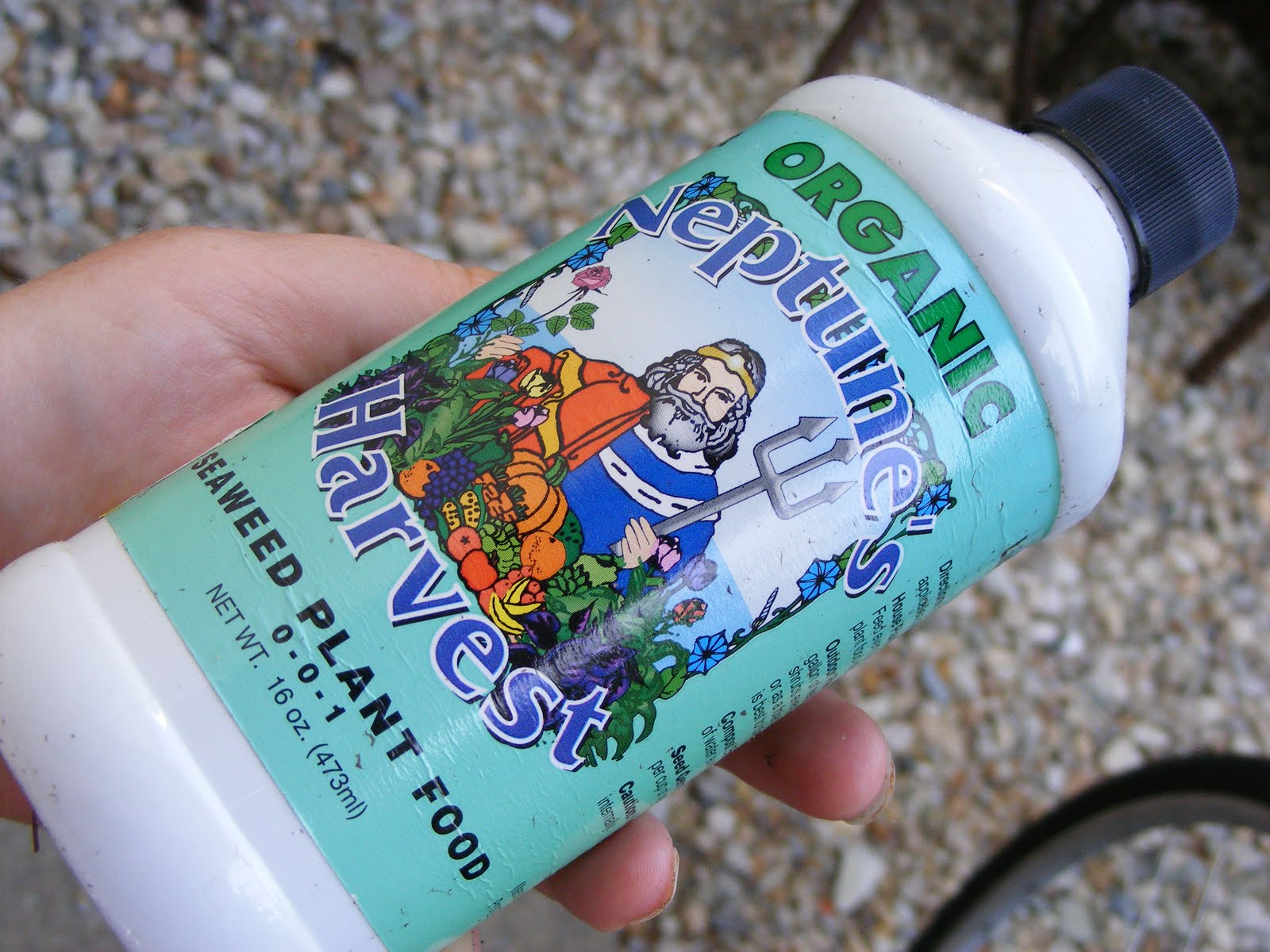
As I watered all my plants I gave them a meal of liquid fertilizer as well. I use organic seaweed fertilizer, which feeds the soil first. This way the nutrients will be available to the roots all season. It's the kind of fertilizer that plants take up at their own pace, so I can enrich the soil regularly without any worry about burning plants like with chemical fertilizers. Rich soil is especially important to plants this time of year as they spread their roots, lengthen their stems, grow their leaves and transform their flowers.


The most conspicuous plant growth that takes place in my garden is by far the reaching of the clematis tendrils. Every day I find it claiming another victim. I politely remove the tendril from the shrub or tall grass it has grabbed onto and redirect it along the top of the fence. Nonetheless, it seems to have a mind of its own. I found it grasping and scaling numerous other plants and objects in my yard when I returned, and found it necessary to train the vine with bits of wool, tying it fast to the fence. (After training it I gave it a nice meal.)


When I ventured over to my vegetable plots, I had expected to see more growth from my rhubarb. Looks like the slugs paid a few visits, inhibiting the health of the leaves. They did the same thing to a few of my pepper plants and my only dahlia. I just may have to inhibit the health of those slugs with some bait or sharp eggshells or worse.


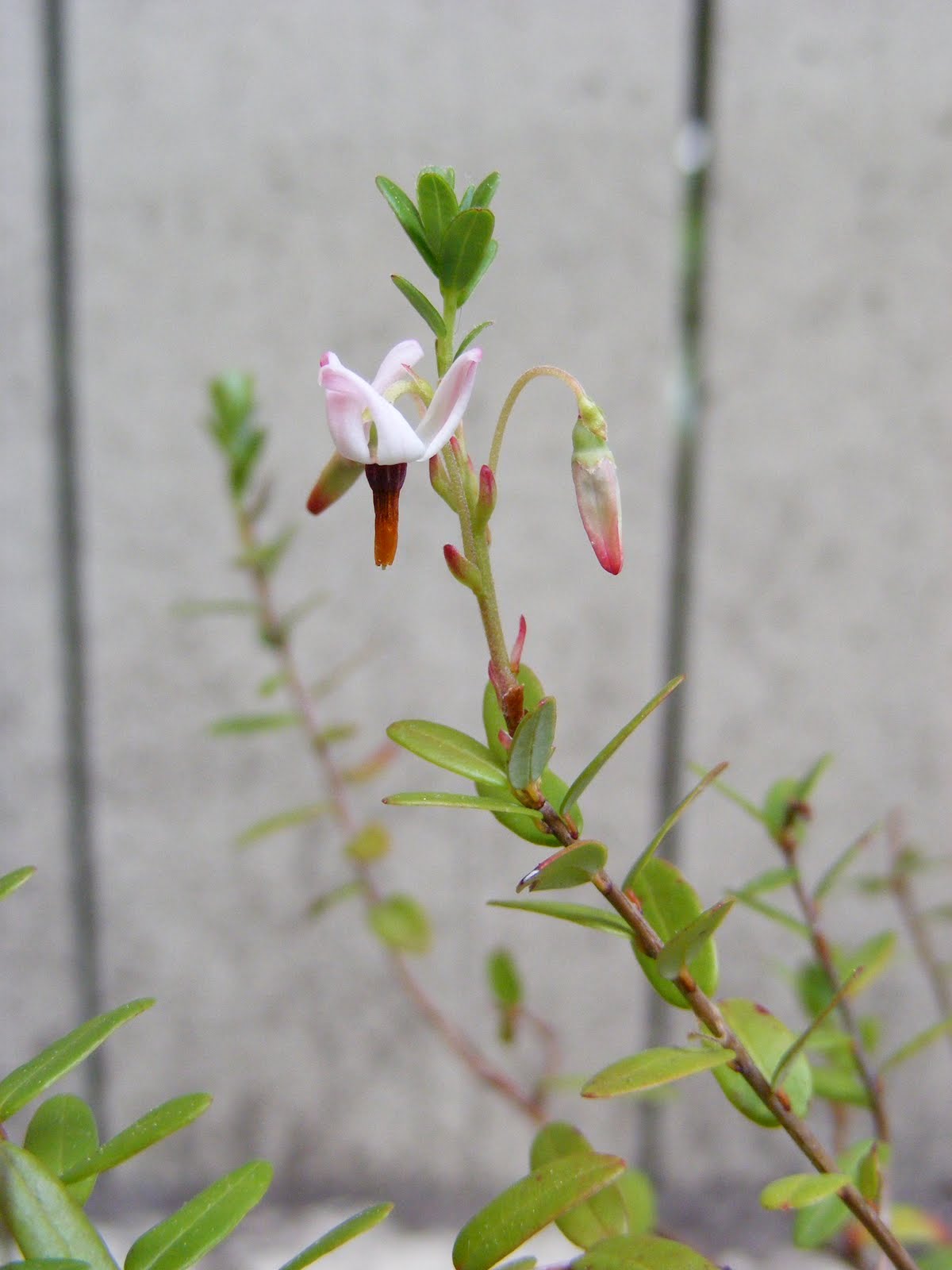
My new cranberry plant seemed to be healthy and unscathed by my absence. In fact, I counted one, two, three future cranberries. I plopped it, nursery pot and all, into a small tub of water before I left and that seemed to pay off. For the longer term, I plan to find a special pot for it with no holes in the bottom. As long as this New England native has access to boggy soil and a good amount of sun, it will continue to be happy.


Finding new pots was one of the more favourable garden chores of the week, but my most favourite chore didn't crop up until I came across a few bare spots in the garden soil. I would just have to scour the nursery for a few new plants! Now that my garden was filling out, I could clearly see the places that needed a little more greenery. One of these was the pot that I grew my raspberries in last year, at left. (I chose to transplant the raspberry into one of my vegetable plots earlier in the season.)


When all those chores were done, there was just one more thing left to do: light a torch and enjoy the evening!